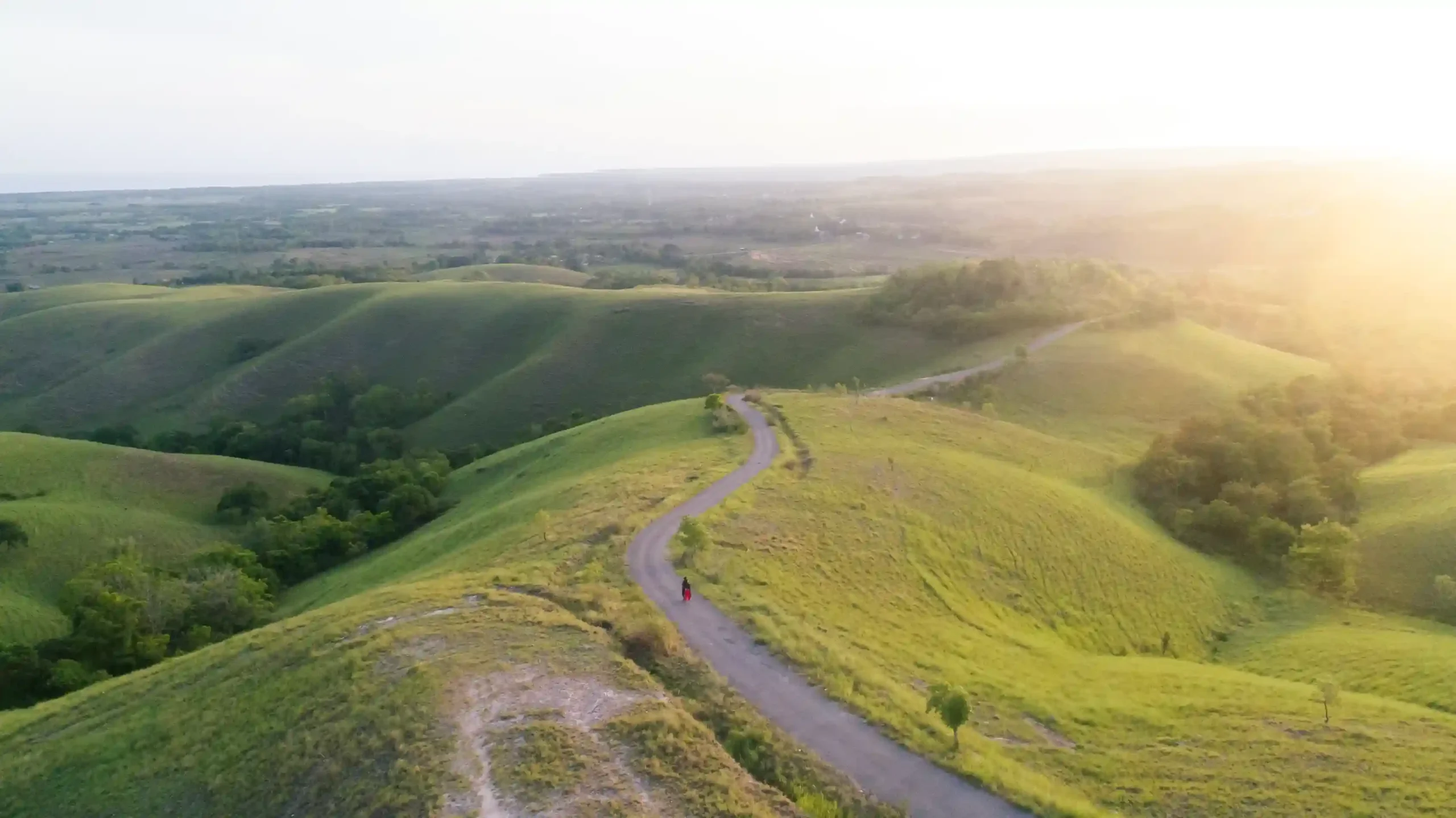
Warinding Hill
Grass hills in the west where horses graze loose. Sunset stop on the four and five day trips.
Open trip departs every Thursday, private trips on your dates
Check availability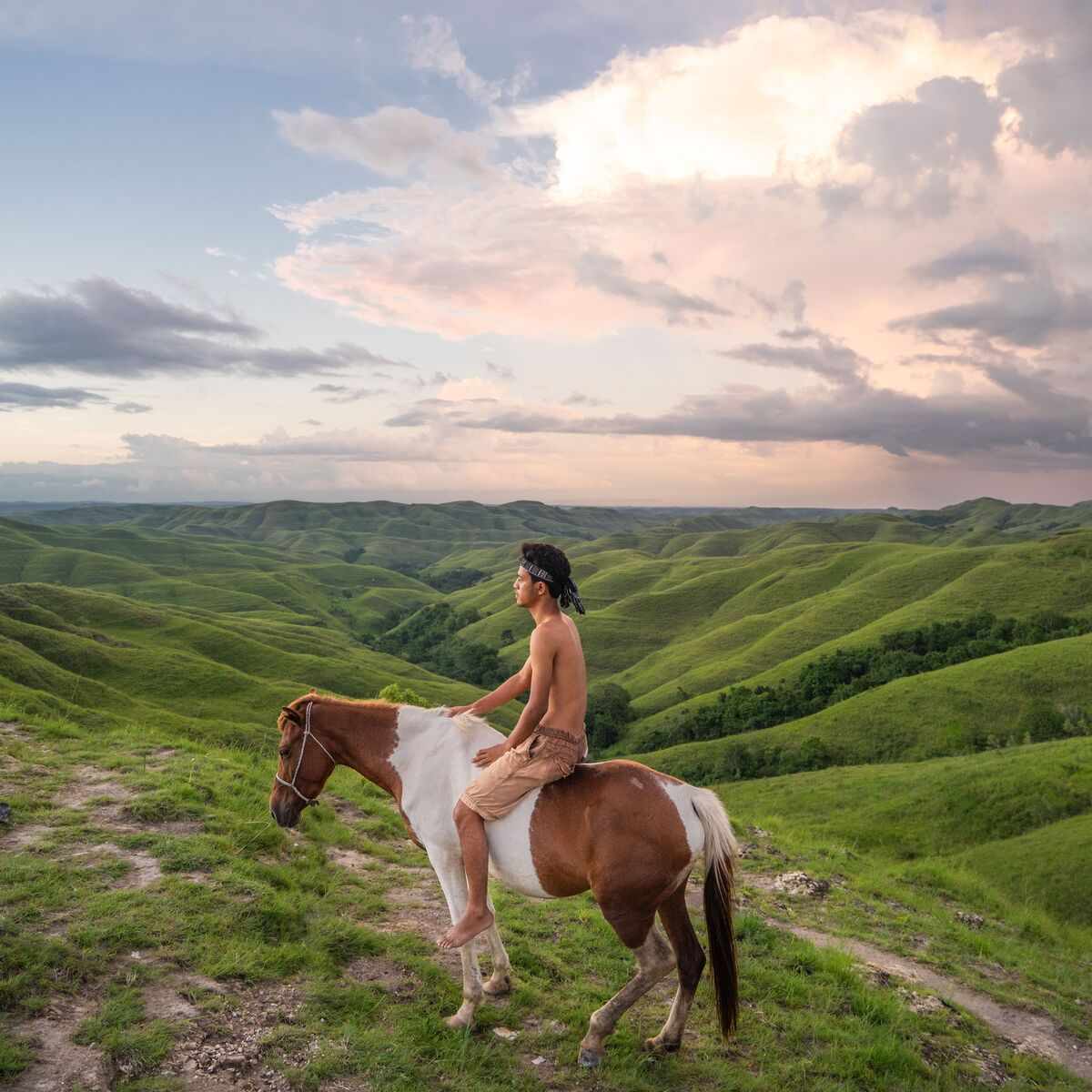
Marapu Sumba
Sumba's indigenous pony is not livestock. It is status, bridewealth and ritual, and it shaped the savanna you drive across on the way east.
Plan on WhatsAppThe Sandalwood horse is Sumba's indigenous pony, a marker of status and wealth in Marapu communities long before it was ever a means of transport.
On the trip
Not in a paddock. They are working animals on open ground.
Grass hills in the west where horses graze loose. Sunset stop on the four and five day trips.
Open savanna in East Sumba, on the five and six day trips.
Tethered and grazing among the houses at Ratenggaro and Prai Ijing.
If someone is with the horse, the same courtesy applies as anywhere else on the island.
Getting there
Purukambera is on the longer two. Warinding is on all four.
Shared departure every Thursday, USD 459 per person.
Your own car and dates, from USD 390.
Fourteen destinations, from USD 490.
Eighteen destinations, from USD 570.
Purukambera needs five days or more. Send your dates and we will confirm.