
Praijing Village: The Hilltop Traditional Village Above Waikabubak
Praijing Village: The Hilltop Traditional Village Above Waikabubak
By our specialist desk, Sumba Travel Curator
After nine years of guiding travellers through Sumba, one of the first questions I am often asked is, “Where can we see a traditional village without a full day of driving?” For anyone staying in or around Waikabubak, the administrative heart of West Sumba, my answer is always immediate: Praijing Village.
Just a short drive from the town, the skyline of Praijing Village Sumba appears, a collection of soaring, grass-thatched roofs rising from a green hillside. It is perhaps the most photographed traditional village on the island, and for good reason. Its accessibility, combined with a vibrant, living culture, makes it an essential introduction to the Marapu way of life that defines this island. But a visit here is more than a photo opportunity; it is a chance to begin to understand the deep-rooted beliefs that are woven into the architecture, the landscape, and the daily lives of the Sumbanese people.
What is Kampung Praijing Sumba?
Kampung Praijing is a traditional Sumba village, or kampung adat, located approximately three kilometres south of Waikabubak. It occupies a commanding position on a terraced hill, offering clear views over the surrounding rice paddies and valley. The village is composed of two main parts, separated by a small valley, with paths connecting the clusters of traditional houses.
While it feels ancient, the Praijing you see today was largely rebuilt after a fire in 2000. This reconstruction, done with community effort and adherence to traditional methods, shows the resilience of Sumbanese culture. Today, it is an active community where families live, work, and practice their ancestral customs, making it a valuable place for visitors to observe, learn, and interact respectfully.
Its proximity to Waikabubak makes it the most convenient traditional village Waikabubak has to offer, serving as a perfect first stop on a West Sumba itinerary.

The Soul of the Village: Understanding the Uma Mbatangu
The first thing you will notice are the houses. These are Sumba’s iconic Uma Mbatangu, which translates to “peaked-roof house.” The dramatic, towering roof is more than an architectural feature; it is a physical representation of the Marapu cosmology.
Each traditional house is structured in three distinct levels, mirroring the Marapu universe:
- The Lower Level (Uma Dalu): The space underneath the house, often on stilts, is where livestock like pigs and chickens are kept. This level represents the underworld, or the world of animals and spirits of the earth.
- The Middle Level (Bani Uma): This is the main living area, where the family cooks, eats, sleeps, and socializes. It symbolizes the world of humans, the space of daily life and activity.
- The Upper Level (Uma Kalada): The tall, peaked tower is the most sacred part of the home. It represents the heavens, the abode of the ancestral spirits. This is where the family stores its sacred heirlooms (pusaka) and makes offerings to the Marapu, the deified ancestors. The height of the tower is an indicator of the family’s social status and wealth.
As you walk through the village, you will see how this structure is repeated, creating a community deeply connected to its spiritual foundations. The roofs are thatched with tough alang-alang grass, and the structures are built from wood and bamboo, all bound together without a single nail.
Planning Your Praijing Sumba Visit
How to Get There
Praijing Village is located just a 15-minute drive from the centre of Waikabubak. The road is paved and generally in good condition, making it accessible for both cars and motorbikes. While a 4WD vehicle is our standard for navigating Sumba’s unpredictable roads, especially during the wet season (October to March), a regular car can typically reach Praijing without issue during the dry season (April to September).
Best Time to Visit
The light during the early morning and late afternoon is ideal for photography, casting a warm glow on the village. A Sumba hilltop village like Praijing offers excellent sunrise and sunset perspectives. Visiting at these times also means you avoid the midday heat, which can be intense.
An early morning visit allows you to see the village come to life, as residents begin their daily chores. An afternoon visit often concludes with a beautiful view as the sun dips below the horizon.
Cultural Etiquette: How to Visit Praijing Respectfully
Sumba is not a theme park. Its villages are living communities, and entering one is like being invited into a collective home. Approaching your visit with awareness and respect is essential. At Sumba Private Tour, we ensure every visit is managed correctly, but if you are travelling independently, here are the protocols.
- Sign the Guestbook and Provide a Donation: Upon arrival, you will be directed to a small post where you are expected to sign a guestbook. A donation is customary. There is no official ticket price, but a contribution of around IDR 50,000 per person is a good guideline. This money helps support the community directly.
- Engage a Local Guide: I strongly recommend hiring one of the local village guides waiting at the entrance. The fee is small, and their value is immense. They can explain the symbolism of the houses, introduce you to the village headman (*kepala desa*), and act as a translator, facilitating polite interactions. This ensures your visit is a meaningful exchange, not just a passive observation.
- Ask Before Photographing People: Always ask for permission before taking a close-up photograph of anyone, especially elders. A smile and a gesture towards your camera are usually understood. A guide can help you ask politely in the local language. Never take photos of people bathing or during private ceremonies.
- Dress Modestly: Please cover your shoulders and knees. A sarong is always a good item to carry with you in Sumba for this purpose. It is a simple sign of respect for the local culture.
- Bring a Small Gift (Optional but Appreciated): The traditional gift to offer when visiting a village is sirih pinang (betel nut and areca leaves). You can buy this at any local market in Waikabubak. Presenting it to the village headman or your host is a gesture of friendship and respect. Your guide can facilitate this.
What to See and Do in Praijing Village
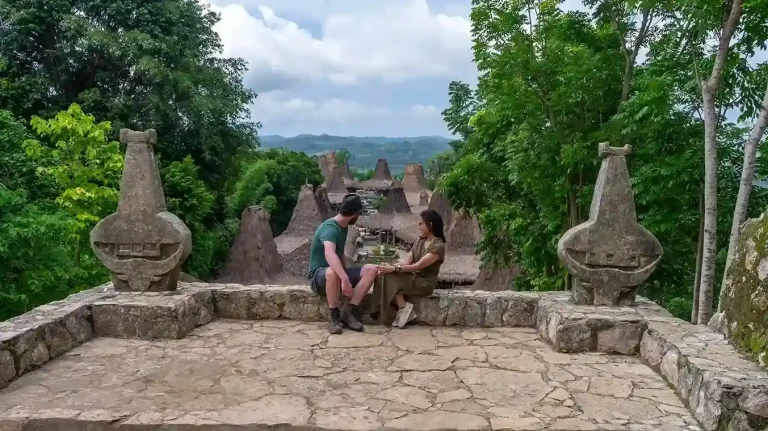
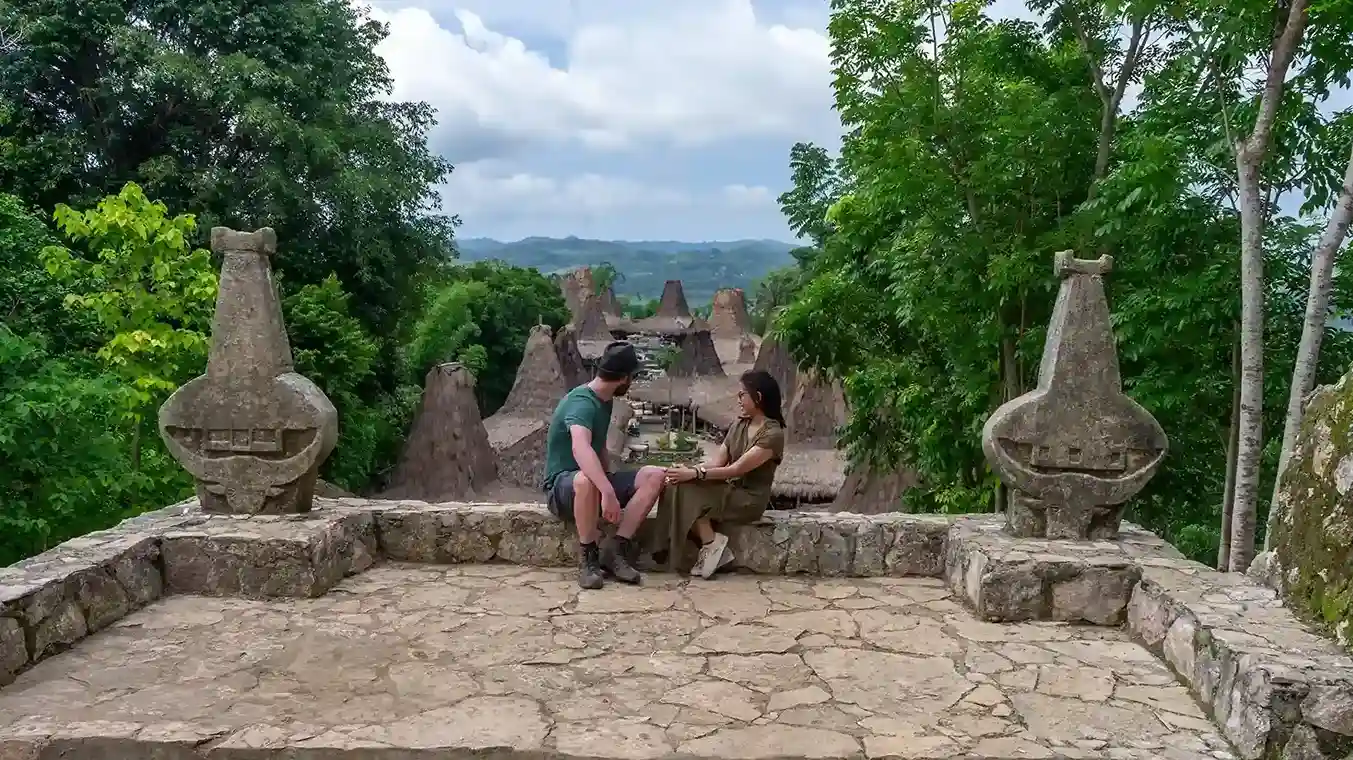
- The Main Viewpoint: Near the entrance is a well-positioned platform offering a panoramic view of the entire village. It is the best spot to appreciate the scale and layout of this unique Sumba hilltop village.
- Megalithic Tombs: Scattered among the houses are large, flat-topped stone tombs. These are characteristic of Sumbanese culture. They are not just graves but monuments that honour the ancestors and signify the status of the clan. Observe them from the path, as they are sacred ground.
- Observe the Architecture Up Close: With your guide, walk the paths and look at the details of the uma mbatangu. Notice the carved symbols on the wooden panels and the buffalo horns adorning the homes, which signify the family’s wealth and the number of funeral ceremonies they have hosted.
- Meet the Village Headman: A local guide can often arrange a brief meeting with the village leader. This provides a personal connection and an opportunity to ask questions (through your guide) about their community and way of life.
- Watch Weavers at Work: You may see women weaving Sumba’s famous ikat textiles on backstrap looms under their homes. This is an intricate, painstaking process. If you wish to purchase a piece, you can be certain it is authentic and your money directly supports the artisan and her family.
Praijing in Context: An Honest Perspective
Praijing’s accessibility is its greatest strength. It provides a genuine cultural experience without requiring the long, often arduous journeys needed to reach more remote villages in the island’s interior. For travellers with limited time or those who prefer a comfortable base in Waikabubak, Praijing is the most practical and rewarding choice.
Is it the most untouched village in Sumba? No. Its popularity means you will likely see other visitors. But it is an authentic, working village that has found a sustainable way to welcome outsiders while preserving its core traditions. For many of my guests, it is the perfect start to their Sumba education, giving them a foundational understanding of the culture before they venture further afield.
A visit to Praijing Village Sumba is more than just a tour; it’s an interaction. It’s seeing a home that is also a temple, a community governed by ancient beliefs, and a people who are rightfully proud of their heritage. If you would like to explore Praijing with a guide who can share its stories and ensure your visit is respectful and enriching, please contact us. We would be honoured to help you connect with the heart of Sumba.
Keep Reading
Uncategorized
Is Sumba Family-Friendly? Travelling with Children to Sumba Island
Considering a Sumba with family trip? Our editorial desk offers candid advice on safety, malaria, roads, and activities for a…
Uncategorized
Photography in Sumba: Tips, Ethics & the Best Locations to Shoot
A practical Sumba photography guide covering ethical practices, essential gear, and the best locations like Walakiri, Weekuri, Ratenggaro, and Pasola.
Uncategorized
Konda Lake East Sumba: Birdwatching at Sumba’s Hidden Waterway
Discover Konda Lake East Sumba, a tranquil tidal waterway near Waingapu, ideal for Konda Lake birdwatching and observing Sumba's unique…