
Marapu: Understanding Sumba’s Animist Belief System as a Respectful Visitor
The `marapu sumba religion` is the ancestral animist belief system that forms the spiritual and cultural bedrock of Sumba Island, profoundly shaping the daily lives and worldview of its indigenous communities. At its heart, Marapu is an ancestor-veneration practice, acknowledging a complex spiritual hierarchy that connects the living to the dead, the natural world, and the divine. For visitors seeking to understand Sumba beyond its beaches and rolling hills, grasping the fundamentals of `marapu belief system` is essential for a respectful and meaningful experience.
What is Marapu: Sumba’s Animist Belief System Explained
`Marapu sumba religion` centres on the reverence of ancestral spirits, known as *marapu*, who are believed to reside in the spirit world but continuously influence the human realm. These spirits are not distant deities; they are the ancestors of specific clans, watching over their descendants, guiding them, and requiring appeasement and respect. This intricate `sumba animism` extends to believing that spirits also inhabit natural objects, sacred sites, and even specific animals, making the entire landscape imbued with spiritual significance.
At the apex of the Marapu cosmology is the concept of a creator deity, often referred to as *Ama Kalada* (Father Creator) or *Ina Kalada* (Mother Creator), who set the world in motion. Below this supreme being are various tiers of spirits, with the ancestral *marapu* being the most directly relevant to daily human affairs. Life is seen as a continuous interaction between the physical and spiritual worlds, with rituals and ceremonies serving as crucial bridges between the two.
Marapu is not a proselytizing religion; it is an inherited tradition, woven into the very fabric of identity for Sumba’s indigenous peoples. While many Sumbanese, particularly in West Sumba, have also adopted Christianity (both Protestant and Catholic denominations are present), Marapu practices often persist alongside Christian faith. This syncretism means that a community might participate in Christian church services on Sunday, while still observing traditional Marapu rituals in their ancestral homes and villages. This dual adherence is a common reality, illustrating the enduring strength and adaptability of `marapu sumba culture`.
The Core Tenets of Marapu: Ancestors, Balance, and Community
The `marapu belief system` is built upon several foundational principles:
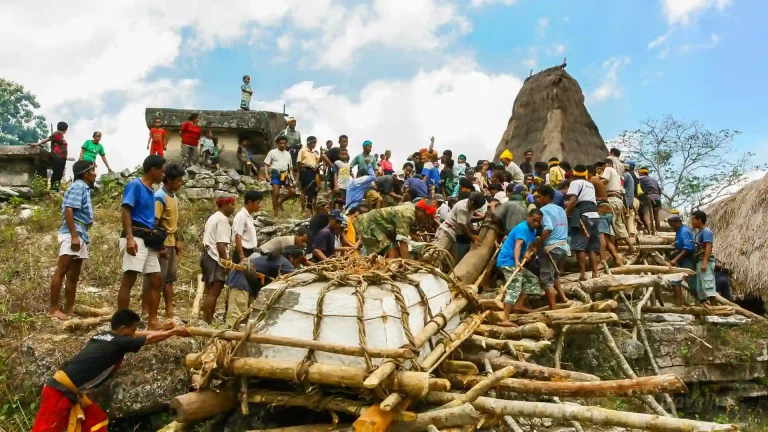
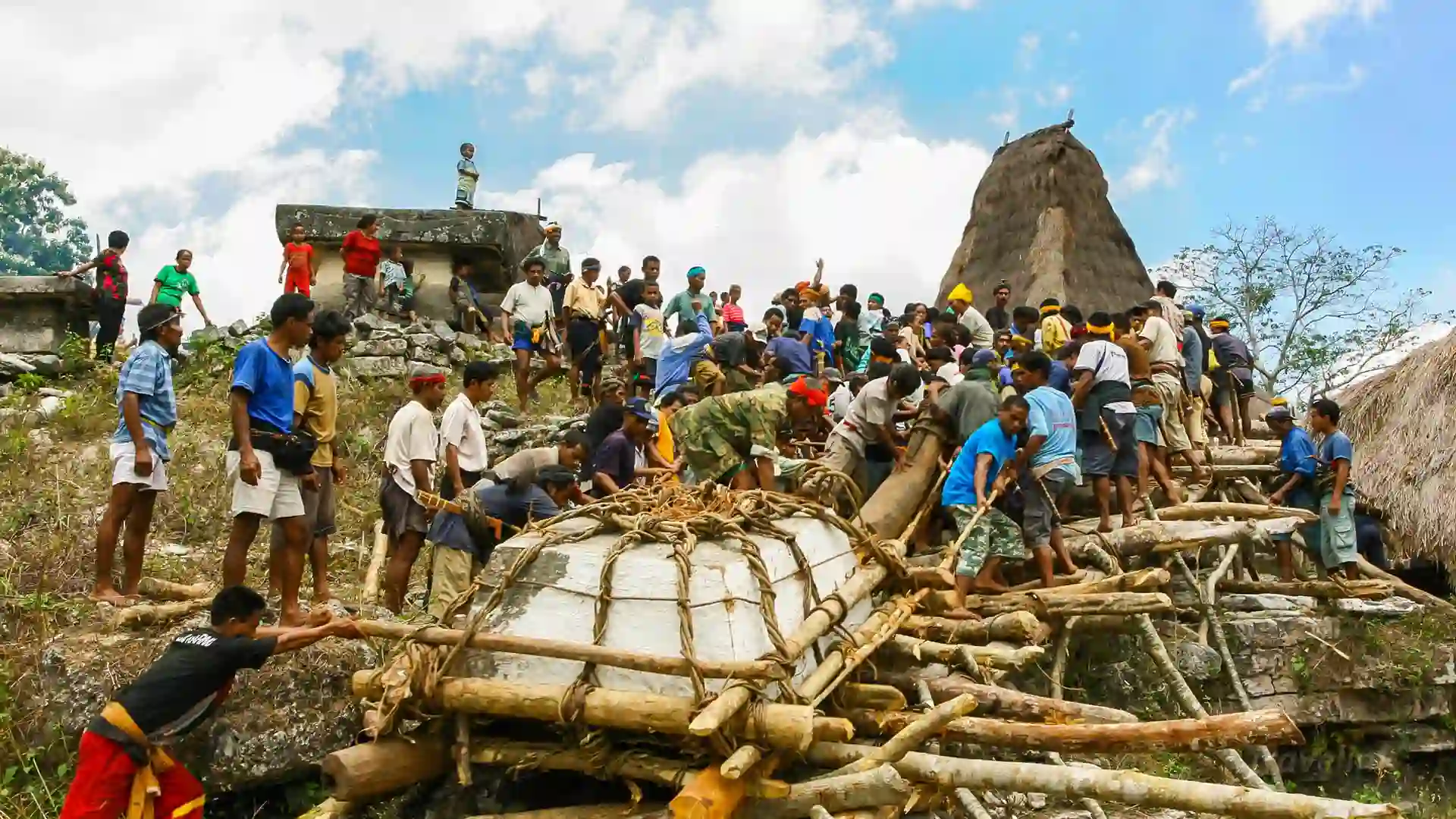
* **Ancestor Veneration:** The most prominent aspect. Ancestors are not merely remembered; they are active participants in the lives of their descendants. Their well-being in the spirit world depends on the respect and offerings from the living, and in turn, their blessings ensure prosperity, health, and fertility for the community. Elaborate burial rituals, often involving megalithic tombs, reflect this deep reverence.
* **Cosmic Balance:** Marapu emphasizes the importance of maintaining harmony between opposing forces – male and female, sky and earth, living and dead, good and bad. Rituals are often designed to restore or maintain this balance, ensuring the fertility of the land, the health of the community, and the overall order of the cosmos.
* **Communal Identity:** Marapu is intrinsically linked to clan (or *kabisu*) identity. Each clan has its own specific *marapu*, ancestral lands, sacred objects, and ritual practices. Belonging to a clan means participating in its Marapu traditions, which reinforces social bonds and provides a strong sense of belonging and shared heritage.
* **Interconnectedness with Nature:** The natural world is deeply spiritual. Specific trees, stones, rivers, and even animals can be sacred, embodying spirits or serving as conduits to the spirit world. This leads to a profound respect for the environment and traditional ecological knowledge.
- Key Marapu Terms for Visitors
- Understanding these terms helps when engaging with Marapu communities:
- Marapu
- The ancestral spirits themselves; also, the general term for the traditional belief system.
- Uma Deta / Uma Adat
- The traditional, sacred clan house. Often characterized by a tall, distinctive peaked roof. The spiritual heart of a Marapu community.
- Rato
- A ritual specialist or priest who communicates with the marapu, interprets omens, and leads ceremonies.
- Nyale
- Sea worms that appear annually, signifying the start of the planting season and directly linked to the timing of the Pasola festival.
- Adat
- Customary law, tradition, and cultural practices that govern social life and are deeply intertwined with Marapu beliefs.
- Kabisu
- Clan or lineage, the fundamental social unit in Sumba, with each having its own Marapu traditions.
- Paraing
- A traditional village, often fortified, containing Uma Deta and megalithic tombs.
Marapu in Practice: Sacred Houses, Rituals, and Specialists
The `traditional religion Sumba` manifests tangibly in specific structures, ceremonies, and roles within the community. These are not merely historical relics but living expressions of faith.
The Uma Deta: Sacred Clan Houses
The most visible symbol of Marapu is the *Uma Deta* or *Uma Adat*—the traditional ancestral house. These distinctive structures, with their soaring, often pyramid-shaped roofs, are far more than dwellings. They are living temples, the spiritual nexus for a clan. The roof itself is considered sacred, believed to be the dwelling place of the *marapu*. Inside, specific areas are designated for rituals, ancestral altars, and the storage of sacred objects.
The design and construction of an *Uma Deta* are steeped in tradition and symbolism, reflecting the cosmology of the `marapu belief system`. The central pillar, for instance, often represents the connection between the sky and the earth, and between the living and the dead. These houses are meticulously maintained and are the primary venues for important family and clan ceremonies, from births and marriages to funerals and seasonal rites.
The Rato: Ritual Specialists and Guides
Central to Marapu practice are the *Rato*, the ritual specialists or priests. These individuals are guardians of traditional knowledge, mediators between the human and spirit worlds, and interpreters of omens. A *Rato* undergoes extensive training, inheriting knowledge passed down through generations. They are responsible for leading ceremonies, performing blessings, interpreting dreams or natural signs (like the appearance of the *nyale* worms), and ensuring that *adat* (customary law) is upheld.
The *Rato* plays a critical role in determining the timing of significant events, such as the Pasola festival. The exact date of Pasola is never fixed on a calendar; it is revealed by the *Rato* after observing the *nyale* worms, which emerge from the sea around February or March, signalling the start of the planting season and carrying messages from the ancestors. This illustrates the deep connection between Marapu, nature, and the rhythm of life in Sumba.
Ceremonies and Festivals: Connecting with the Marapu
Life in Sumba is punctuated by a rich calendar of ceremonies, many of which are directly tied to Marapu beliefs. These can range from daily household offerings to elaborate communal festivals.
* **Burial Ceremonies:** Among the most significant, often involving animal sacrifices (buffalo, pigs), traditional dances, and the construction of monumental megalithic tombs that can take years to complete. These are grand affairs, asserting the status of the deceased and their clan, and ensuring their smooth transition to the ancestral realm.
* **Harvest Festivals:** Rites performed to thank the *marapu* for a bountiful harvest and to ask for continued fertility of the land.
* **Pasola:** While often perceived as a warrior festival, Pasola is fundamentally a Marapu ritual. It is a blood sacrifice to appease the *marapu* and ensure a successful harvest, with the spilling of blood on the earth believed to fertilize the soil. The timing, as mentioned, is determined by the *Rato* after observing the *nyale* worms. It is a powerful, sometimes intense, manifestation of `marapu sumba culture`.
Visiting Marapu Communities: Respectful Engagement
For travellers to Sumba, encountering Marapu practices is an inevitable and enriching part of the journey. However, it requires a conscious effort to engage respectfully and understand the cultural context. These are not performances for tourists; they are living traditions.
Essential Guidelines for a Respectful Visit
1. **Always Go with a Local Guide:** This is non-negotiable. A knowledgeable local guide is your bridge to the community. They will know the proper protocols, introduce you to village elders (*Rato* or clan leaders), and facilitate permission to enter sacred spaces. Without a guide, you risk unintentionally offending or disrupting sacred practices.
2. **Seek Permission:** Before entering a traditional village (*paraing*) or approaching an *Uma Deta*, your guide will secure permission from the village head or *Rato*. This is a mark of respect for their autonomy and sacred space.
3. **Dress Modestly:** When visiting traditional villages, especially if there are ceremonies or sacred sites, wear modest clothing. For women, this typically means a sarong (*ikat*) that covers the knees and shoulders. For men, long pants and a shirt with sleeves are appropriate. Your guide will advise on specific requirements.
4. **Observe Quietly and Discreetly:** If you are fortunate enough to witness a ceremony, do so from a respectful distance. Avoid loud talking, disruptive movements, or intrusive photography. Your guide will advise if photography is permitted and under what conditions. Some rituals are strictly closed to outsiders.
5. **Understand Photography Etiquette:** Never photograph people without explicit permission. When permission is granted, be mindful and respectful. Avoid using flash inside sacred houses. Remember, these are people’s lives, not just photo opportunities.
6. **Offer a Small Gift (Sirih Pinang):** It is customary to offer *sirih pinang* (betel nut and accompanying ingredients) as a sign of respect and goodwill when meeting village elders or entering a traditional home. Your guide will arrange this.
7. **Do Not Touch Sacred Objects or Enter Restricted Areas:** Some areas within an *Uma Deta* or around a megalithic tomb are highly sacred and off-limits to visitors. Your guide will point these out. Never touch ancestral altars or sacred relics.
8. **Be Prepared for Basic Conditions:** Traditional villages often have very basic infrastructure. Roads can be rough, especially in the wet season (October to April), requiring a 4WD vehicle to access remote areas like some of the ikat weaving villages in East Sumba. Sanitary facilities may be minimal.
9. **Be Aware of Health Precautions:** Sumba is a tropical island. Take precautions against mosquitoes, especially in rural areas, as malaria is present. Consult your doctor about anti-malarial medication before your trip. Always carry plenty of water and stay hydrated.
The Reality of Pasola Timing
One of the most common questions from travellers is about Pasola. As Dian, I have to be candid: the exact dates of the Pasola festival are never known far in advance. The *Rato* observes the *nyale* worms, which typically appear around February or March, but the precise timing is entirely up to their interpretation. This means you cannot book your trip months ahead with a guaranteed Pasola viewing date. If your heart is set on Pasola, you need flexibility and a willingness to travel with short notice. We track the *Rato*’s announcements closely and can help you plan, but flexibility is key.
Marapu and Modern Sumba: Resilience and Evolution
The `marapu sumba religion` is not static; it is a dynamic belief system that continues to evolve and adapt. While challenges from modernization, Christian influence, and economic development exist, Marapu shows remarkable resilience. In many ways, it is a source of strength and identity for the Sumbanese people as they navigate the complexities of the 21st century.
The enduring presence of megalithic tombs being built today, the meticulous maintenance of *Uma Deta*, and the vibrant continuation of festivals like Pasola all demonstrate the profound cultural vitality of Marapu. For visitors, witnessing this continuity is a powerful reminder that Sumba offers a deep, authentic connection to ancient traditions rarely found elsewhere. It is why we at Sumba Private Tour are committed to designing itineraries that honour this unique cultural landscape.
Whether you are exploring the intricate ikat weaving traditions in East Sumba, where the patterns themselves carry Marapu symbolism, or visiting the traditional villages around Waikabubak in West Sumba, the presence of Marapu is palpable. It is in the stories told by elders, the architecture of the homes, the daily rituals, and the deep respect for the land.
Planning a trip to Sumba means embracing this cultural richness honestly. We’ll help you navigate the logistics—from the roads that might require a sturdy 4WD in the wet season to understanding the nuances of local customs. Our goal is to connect you with Sumba in a way that is respectful, enriching, and truly unforgettable. No one can pay to change what we publish; if you proceed with our partner they may pay us a referral fee at no extra cost to you.
Ready to experience Sumba’s unique culture with a focus on respectful engagement? Plan your trip with us today via our website or WhatsApp for a truly authentic journey.
Frequently Asked Questions About Marapu Sumba Religion
Is Marapu an active religion today?
Yes, absolutely. Marapu is a living, active belief system that profoundly shapes the daily lives, social structures, and cultural practices of many Sumbanese people. While many also practice Christianity, Marapu rituals and beliefs continue to be observed, particularly in traditional villages and during significant life events and festivals.
Can visitors witness Marapu ceremonies?
Sometimes, yes, but it depends on the specific ceremony and the community’s discretion. Some rituals are private and closed to outsiders, while others, especially larger festivals like Pasola or major burial ceremonies, may be open for respectful observation. It is crucial to always have a local guide who can obtain permission and advise on appropriate etiquette. Never attempt to witness ceremonies without an invitation or proper guidance.
What should I do if I want to learn more about Marapu on my trip?
The best way to learn more is to travel with an experienced local guide who understands Marapu culture deeply. They can facilitate respectful visits to traditional villages, introduce you to community elders, and explain the significance of what you are seeing. Reading up before your trip, like this article, also helps build a foundation of knowledge.
Are there specific sacred sites related to Marapu that visitors can see?
Many traditional villages across Sumba, such as Praijing, Ratenggaro, and Tarung-Wee Gala, contain sacred *Uma Deta* (ancestral houses) and megalithic tombs that are central to Marapu practices. These sites are often accessible with a local guide and permission from the community. Your guide will ensure you know which areas are sacred and how to behave respectfully. Remember that the entire landscape, including specific stones or trees, can hold spiritual significance for Marapu followers.
Is it safe to visit traditional Marapu villages?
Yes, it is generally safe to visit traditional villages in Sumba, provided you go with a reputable local guide and adhere to cultural protocols. The Sumbanese people are known for their hospitality. However, always be mindful of your surroundings, respect local customs, and follow your guide’s advice, especially regarding dress code and behaviour in sacred spaces.
Ready to respectfully explore the rich culture of Sumba? Connect with Dian at Sumba Private Tour to design your bespoke journey, including insights into the Marapu belief system. We’re available via our website or WhatsApp to start planning.
Keep Reading
Uncategorized
Is Sumba Family-Friendly? Travelling with Children to Sumba Island
Considering a Sumba with family trip? Our editorial desk offers candid advice on safety, malaria, roads, and activities for a…
Uncategorized
Photography in Sumba: Tips, Ethics & the Best Locations to Shoot
A practical Sumba photography guide covering ethical practices, essential gear, and the best locations like Walakiri, Weekuri, Ratenggaro, and Pasola.
Uncategorized
Konda Lake East Sumba: Birdwatching at Sumba’s Hidden Waterway
Discover Konda Lake East Sumba, a tranquil tidal waterway near Waingapu, ideal for Konda Lake birdwatching and observing Sumba's unique…