
Sumba’s Megalithic Tombs: Understanding the Stone Graves in Every Village
Sumba’s Megalithic Tombs: Understanding the Stone Graves in Every Village
For the last nine years, we have been designing journeys through Sumba. One of the first and most powerful impressions for any traveller here is the presence of stone. Not just the rugged limestone hills or the rocky coastlines, but the enormous, hand-carved stone slab graves that occupy the centre of nearly every traditional village.
Visitors often ask us if these are ancient ruins, relics from a forgotten age. It’s an understandable question. The term ‘megalithic’ makes us think of Stonehenge or Carnac, of prehistoric peoples lost to time. But here in Sumba, that assumption is incorrect. The construction and use of Sumba megalithic tombs is not a practice of the past; it is a fundamental part of a living, breathing culture that continues today.
These are not museum pieces. They are the focal point of community life, the final resting places of revered elders, and a direct, physical link between the world of the living and the realm of the ancestors. Understanding them is essential to understanding Sumba itself. So, let’s look at what these powerful structures represent and how you can visit them with the respect they command.
What Exactly Are These Stone Tombs?
At their most basic, the megalithic tombs of Sumba are graves, built from massive slabs of stone. A typical tomb consists of four stone pillars supporting a huge, flat rectangular capstone, with the burial chamber underneath. They are almost always located in the natara, the open central square of a traditional village (kampung adat), placed directly in front of the ancestral clan houses (uma).
This placement is deliberate and deeply significant. The natara is the heart of the village, where ceremonies are held, community decisions are made, and children play. By placing the tombs of the ancestors here, the dead remain physically and spiritually present in the daily lives of their descendants. They are not separated from the living; they are integrated, watching over the community they built.
These are not individual graves as you might find in a Western cemetery. They are clan burials. A single large tomb can house the remains of multiple generations of a high-status family line. For Sumbanese who follow the ancestral Marapu belief, the connection to one’s clan and ancestors is paramount, and these tombs are the most visible expression of that bond.
A Living Tradition, Not a Prehistoric Relic
The most important thing to grasp is that new traditional graves in Sumba are still being built. When a high-ranking noble (maramba) or an important elder passes away, the family may decide to honour them with the construction of a new tomb. This is an immense undertaking that can take years of planning and enormous resources.
First, a suitable stone must be found, sometimes kilometres away from the village. The process of quarrying it using simple tools and then transporting it is a massive community effort known as tarik batu, or ‘pulling the stone’. Hundreds of people from the clan and allied villages will come together to drag the stone, which can weigh many tonnes, over land on wooden rollers. This is accompanied by ritual, chanting, and sacrifice, a communal event that reinforces social bonds.
Because of the expense and sheer effort involved, witnessing a tarik batu ceremony is rare for travellers. But knowing that this process still occurs underscores a vital point: this megalithic culture is not a performance for tourists. It is a deeply held tradition, central to the Marapu understanding of life, death, and ancestral duty.
The Story in the Stone: Status, Sacrifice, and Symbolism
A Sumba stone tomb is more than a grave; it is a biography of the deceased and a statement of their clan’s social standing. The size, complexity, and decoration of a tomb directly reflect the wealth and influence of the family.
A larger, heavier capstone signifies a more powerful clan, as it indicates they had the resources to move it and to perform the extensive funeral rites that accompany it. The Marapu funeral ceremony is the most important ritual in a person’s existence, ensuring their spirit travels safely to the afterlife, Prai Marapu. This requires the sacrifice of animals — sometimes dozens, or even hundreds, of water buffalo, pigs, and horses. These animals are believed to accompany the soul of the deceased on its journey and serve as a demonstration of the family’s wealth to the community.
The cost of these ceremonies, which also includes feeding hundreds of guests for days and providing gifts of exquisite ikat cloth, is astronomical. The construction of the marapu funeral tomb itself is the final, permanent monument to this ceremonial obligation and the status it confirms.
Many tombs feature carvings. Look closely, and you may see motifs of horses and buffalo, representing the sacrifices made. You might also see human figures, roosters, or symbols of wealth and fertility like the mamuli (a traditional omega-shaped ear pendant). These carvings tell a story, preserving the legacy of the person interred within for future generations.
Where to See Notable Megalithic Tombs in Sumba
While you will see tombs in almost every village, a few locations are particularly well-known for their impressive scale and setting.
In West Sumba:
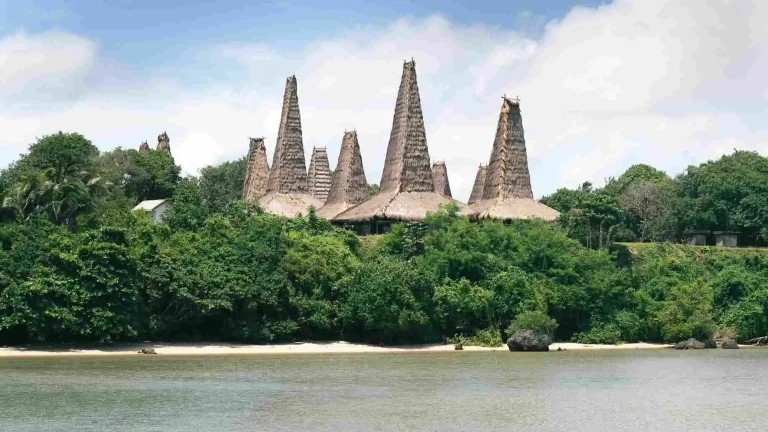
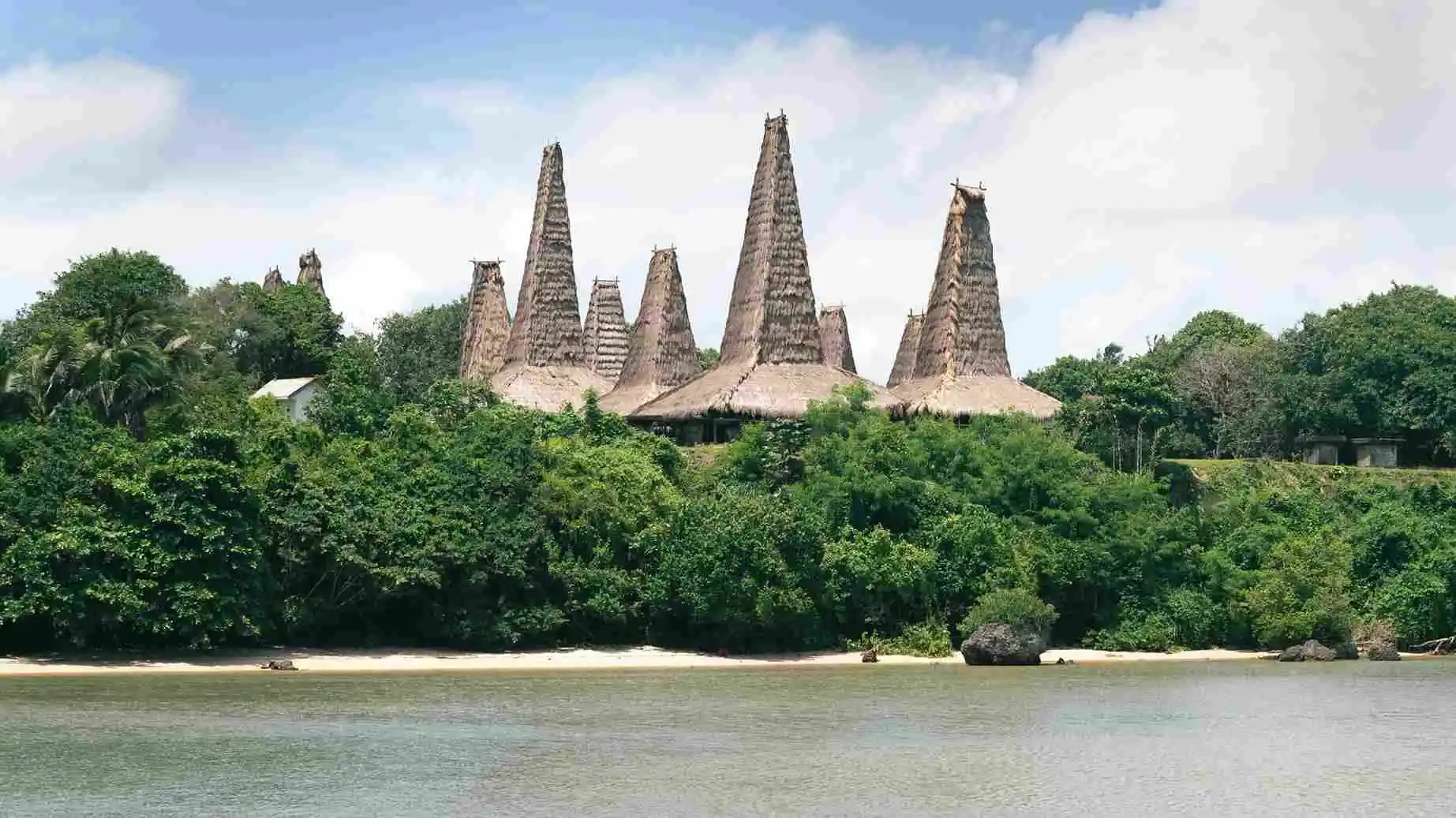
- Kampung Ratenggaro: This is perhaps the most photographed village in Sumba. Here, dozens of tall, pointed-roof traditional houses stand on a low headland, with the ocean as a dramatic backdrop. The village green is filled with large, well-preserved megalithic tombs. The combination of the unique architecture, the ancient-looking tombs, and the sea is unforgettable. It’s a coastal village, so be prepared for the heat.
- Kampung Tarung and Waitabar: Located on a hillside right in the heart of Waikabubak, Sumba’s second-largest town, these twin villages offer a different context. Here, the tombs are surrounded by the sounds of daily life. The villages suffered a devastating fire in 2017, but the community has been rebuilding, a powerful example of cultural resilience. The tombs survived, standing as silent anchors to the past as the community builds its future.
In East Sumba:
- Praiyawang in Rende: The village of Rende is home to the tombs of the local royal clan. The tombs here are particularly large and feature detailed carvings of human figures, animals, and other Marapu symbols, offering a clear display of the clan’s historical power.
- Kampung Pau and Umabara: Near the town of Melolo, these villages also contain royal tombs with impressive carvings, including a well-known tomb with a depiction of the deceased king and his wife.
A Guide to Visiting Respectfully
Because these are living communities and sacred sites, how you visit matters. This is not a theme park. It is someone’s home and a place of worship. The single most important piece of advice we can give is to always be accompanied by a local Sumbanese guide.
Your guide is not just a translator; they are your cultural bridge. They will know the local courtesies, handle the formal introductions to the village elders, and explain the protocols. Here are a few key points of etiquette:
- Ask for Permission to Enter: Your guide will do this for you. You do not just wander into a traditional village. It is customary to present a small gift, typically sirih pinang (betel nut), as a sign of respect. Your guide will have this prepared.
- Dress Modestly: Cover your shoulders and knees. A sarong is always a good and respectful choice for both men and women.
- Photography: This is crucial. Always ask your guide before taking any pictures. Do not take photos of people, especially elders, without their explicit permission. Never, ever use a drone without clearing it with the village leaders first. These are private spaces, and intrusive photography is deeply disrespectful.
- Do Not Touch the Tombs: These are sacred gravesites. Do not sit on them, climb on them, or place any of your belongings on them.
- Be Open and Observant: The best experience comes from quiet observation. Watch the rhythms of daily life unfolding around these stone monuments. Listen to the stories your guide shares. This approach will give you a much richer understanding than a simple photo stop ever could.
Sumba’s megalithic tombs are a direct, unfiltered connection to a culture that measures time in generations, not years. They are a physical reminder that in Sumba, the ancestors are never truly gone. They remain in the heart of the village, silent and steadfast, carved in stone.
If you are ready to explore the deep cultural landscape of Sumba and learn the stories held within these stones, we at Sumba Private Tour can help you do so with the honesty and respect this island deserves. Let’s plan a journey that connects you to the real Sumba.
Keep Reading
Uncategorized
Is Sumba Family-Friendly? Travelling with Children to Sumba Island
Considering a Sumba with family trip? Our editorial desk offers candid advice on safety, malaria, roads, and activities for a…
Uncategorized
Photography in Sumba: Tips, Ethics & the Best Locations to Shoot
A practical Sumba photography guide covering ethical practices, essential gear, and the best locations like Walakiri, Weekuri, Ratenggaro, and Pasola.
Uncategorized
Konda Lake East Sumba: Birdwatching at Sumba’s Hidden Waterway
Discover Konda Lake East Sumba, a tranquil tidal waterway near Waingapu, ideal for Konda Lake birdwatching and observing Sumba's unique…